Every seller I meet has already looked up their Zestimate. That's fine — I'd do the same thing. But I want to explain what that number is and isn't, because the gap between an automated

Dated: August 7 2026
Views: 3
Most people move to Santa Clarita from somewhere thirty minutes south. They've been priced out of a neighborhood in the San Fernando Valley, or they've got a second kid on the way and the two-bedroom isn't working anymore, and someone told them to look north on the 5.
Then they get here and discover that "Santa Clarita" isn't one place. It's six, they all have different price points and different housing stock, and the difference between them is not obvious from a Zillow map.
I've sold real estate in Manhattan and Brooklyn, and I've sold it here. The thing that surprised me most about this market is how much the sub-area matters — more than it does in a lot of dense urban markets, where the block matters and the neighborhood name is mostly branding. Here, the community you pick determines your commute, your property tax bill, your school district, and how your home holds value. It's worth getting right.
Here's how the six break down.
The City of Santa Clarita was incorporated in 1987 out of four existing communities: Valencia, Saugus, Newhall, and Canyon Country. Those four are inside city limits.
Stevenson Ranch and Castaic are not. They're unincorporated Los Angeles County, which means county services rather than city services, though most people lump them in when they say "Santa Clarita." Val Verde, Agua Dulce, and Acton sit further out.
That distinction matters more than it sounds. Unincorporated areas answer to the county for permits, code enforcement, and road maintenance. It's not better or worse — it's just different, and it occasionally surprises people at renovation time.
Valencia is the master-planned one. It runs from Lyons Avenue north past Copper Hill Drive, and from the 5 freeway east to Bouquet and Seco Canyon.
The defining feature is the paseo system — a network of landscaped walking and biking paths that pass under the major roads through dedicated bridges and tunnels, so you can walk a long way without crossing traffic. There are over 100 miles of trails and paseos across the valley, and Valencia has the densest concentration. If you have kids who bike to school, or you run, this is a genuine quality-of-life difference from most Southern California suburbs.
Housing stock ranges widely — 1970s and '80s single-family tracts in the older sections, townhomes and condos in the middle, and newer construction in the FivePoint development west of Magic Mountain.
One thing to know: Valencia is not one neighborhood, it's about a dozen. The price gap between an older Northbridge tract home and a new FivePoint build is substantial and predictable. When you search, search the sub-area, not "Valencia."
Also know: many of the newer Valencia tracts carry Mello-Roos special taxes. Older sections generally don't. This can swing your monthly payment by a few hundred dollars, and it affects what you qualify for.
Saugus sits north and east of Valencia, running up to Vasquez Canyon Road and over to Golden Valley. It's largely traditional suburban tract housing — more conventional layouts than Valencia's master-planned design, generally on slightly larger lots for the money.
Central Park is here, and the summer Concerts in the Park series runs out of it. The Skyline Ranch development on the eastern edge is newer construction and does carry Mello-Roos; most of the older Saugus neighborhoods don't.
Saugus tends to give you more square footage per dollar than Valencia. The trade-off is that you're further from the 5 and from Valencia Town Center, so the commute and the errand run both get a little longer.
Newhall is the oldest community in the valley — the first permanent town here. It's the southernmost, sitting closest to the 14 and to the LA basin.
Old Town Newhall has been the subject of a long revitalization effort: a walkable main street, the Santa Clarita Performing Arts Center, restaurants, a farmers market. If you're coming from a city and you miss being able to walk somewhere for dinner, Newhall is the closest thing the valley has.
Housing stock skews older and more architecturally varied than the master-planned areas — more mid-century, more one-off homes, fewer tract subdivisions. Entry prices are generally the lowest inside city limits. Older Newhall largely does not carry Mello-Roos.
Canyon Country is the eastern side, bounded by Golden Valley Road to the west and running out toward the San Gabriel and Sierra Pelona mountains.
It has the widest range of anything in the valley. You'll find condos and townhomes at the affordable end, standard suburban tracts in the middle, and larger lots and semi-rural parcels as you get out toward the canyons. It's also the area that's grown most in the last two decades.
If your budget is tight and you want a detached house rather than a townhome, Canyon Country is usually where the math works. The commute is the longest of the six, which is the honest trade.
West of the 5, unincorporated county, running from just south of Magic Mountain Parkway down toward Sagecrest. Stevenson Ranch is the commuter's pick — it's the closest point in the valley to the LA basin, and if you work in the west San Fernando Valley or on the Westside, you'll feel the difference every morning.
It's newer, master-planned, and consistently one of the higher price points in the area. Most of Stevenson Ranch carries Mello-Roos. Budget for it before you fall in love with a house.
North of Valencia along the 5, unincorporated. Castaic Lake is the anchor — boating, camping, fishing, and a lot of open space. Lot sizes get bigger, horse properties exist, and you're genuinely at the edge of the valley.
Newer developments like Tesoro Highlands carry Mello-Roos. It's the furthest out, which means the longest commute and, generally, the most land for the money.
After you've toured all six, the decision almost always comes down to the same three variables:
1. Where do you drive on a Tuesday morning? Not where you could work someday — where you actually go. Stevenson Ranch to Warner Center is a different life than Canyon Country to Warner Center. Drive the commute at 7:30 a.m. before you write an offer. Not on a Sunday.
2. What's the total carrying cost? Not the mortgage. The mortgage plus property tax plus Mello-Roos plus HOA plus insurance. Two homes at the same list price in different communities can differ by $400 a month once you add it all up, and lenders count that against your qualification.
3. Which schools serve the specific address? Not the community — the address. Santa Clarita's school structure catches almost every buyer off guard: the high schools are one district, but elementary is split across several separate districts, and the boundaries don't follow community lines.
Is Santa Clarita a good place to live? That depends entirely on what you need from a place, and I'd be suspicious of any agent who answers it differently. What I can tell you factually: it's roughly 30–45 minutes from central LA depending on traffic and origin, it has over 100 miles of trails and paseos, housing runs from condos to acreage, and the six communities differ meaningfully in price, commute, and housing type. Whether that adds up for you is your call to make — my job is to make sure you have accurate information to make it with.
What's the difference between Santa Clarita and Valencia? Valencia is one of the communities within the City of Santa Clarita. Santa Clarita is the city; Valencia, Saugus, Newhall, and Canyon Country are the four communities that merged to form it in 1987. Stevenson Ranch and Castaic are nearby but unincorporated.
Which Santa Clarita community is the most affordable? Historically, Newhall and Canyon Country have the lowest entry prices, and Canyon Country generally offers the most detached-home square footage per dollar. Current figures change constantly — ask me for this month's numbers rather than trusting a stat in a blog post.
Do all Santa Clarita homes have Mello-Roos? No. It's concentrated in newer master-planned developments — FivePoint Valencia, West Creek, Skyline Ranch, Tesoro Highlands, most of Stevenson Ranch. Older neighborhoods in Saugus, Canyon Country, and central Newhall generally don't carry it. It has to be verified parcel by parcel.
How long is the commute from Santa Clarita to Los Angeles? Highly variable by origin and destination. Stevenson Ranch is the closest point to the basin; Canyon Country and Castaic are the furthest. The only useful answer is to drive your actual route at your actual departure time before you commit.
Thinking about a move to the Santa Clarita Valley? I'm happy to walk you through the trade-offs between communities before you start touring — it saves a lot of wasted Saturdays. Reach out and let's talk.
Matt Drago | Equity Union Real Estate 818.838.5438 | mattdragorealestate@gmail.com | DRE# 02104654
Equal Housing Opportunity.
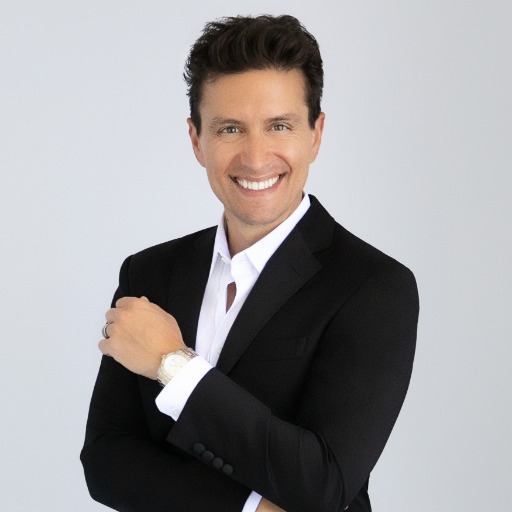
Matt is a residential real estate agent serving the Santa Clarita Valley, with a focus on marketing and negotiation. He began his career in New York City after graduating from Marymount Manhattan Coll....
Every seller I meet has already looked up their Zestimate. That's fine — I'd do the same thing. But I want to explain what that number is and isn't, because the gap between an automated
Somewhere around day ten of escrow, a buyer gets handed a stack of HOA documents that runs several hundred pages. Almost nobody reads it. Most people skim the dues amount, confirm the pool is
There are plenty of articles explaining what Mello-Roos is. Most of them stop right where the question gets useful.Here's the part that matters: Mello-Roos doesn't just add to your monthly payment.
Most people move to Santa Clarita from somewhere thirty minutes south. They've been priced out of a neighborhood in the San Fernando Valley, or they've got a second kid on the way and the two
 Based on information from California Regional Multiple Listing Service, Inc. as of September 21, 2026 11:00 AM UTC This information is for your personal, non-commercial use and may not be used for any purpose other than to identify prospective properties you may be interested in purchasing. Display of MLS data is usually deemed reliable but is NOT guaranteed accurate by the MLS. Buyers are responsible for verifying the accuracy of all information and should investigate the data themselves or retain appropriate professionals. Information from sources other than the Listing Agent may have been included in the MLS data. Unless otherwise specified in writing, Broker/Agent has not and will not verify any information obtained from other sources. The Broker/Agent providing the information contained herein may or may not have been the Listing and/or Selling Agent.
Based on information from September 21, 2026 11:00 AM UTC The information being provided by CRMLS is for the visitor's personal, noncommercial use and may not be used for any purpose other than to identify prospective properties visitor may be interested in purchasing. The data contained herein is copyrighted by CRMLS, CLAW, i-Tech MLS, PSRMLS and/or VCRDS and is protected by all applicable copyright laws. Any dissemination of this information is in violation of copyright laws and is strictly prohibited.
Any property information referenced on this website comes from the Internet Data Exchange (IDX) program of CRMLS. All data, including all measurements and calculations of area, is obtained from various sources and has not been, and will not be, verified by broker or MLS. All information should be independently reviewed and verified for accuracy. Properties may or may not be listed by the office/agent presenting the information.
 The MLS™ I-Tech ® All information deemed reliable but not guaranteed. All properties are subject to prior sale, change or withdrawal. Neither listing broker(s) or information provider(s) shall be responsible for any typographical errors, misinformation, misprints and shall be held totally harmless. Listing(s) information is provided for consumer's personal, non-commercial use and may not be used for any purpose other than to identify prospective properties consumers may be interested in
purchasing. The data relating to real estate for sale on this website comes in part from the Internet Data Exchange program of the Multiple Listing Service. Real estate listings held by brokerage firms other than Equity Union Santa Clarita may be marked with the Internet Data Exchange logo and detailed information about those properties will include the name of the listing broker(s) when required by the MLS. Copyright ©2026 All rights reserved.
Last Updated: September 21, 2026 10:49 AM UTC
Show More...
The MLS™ I-Tech ® All information deemed reliable but not guaranteed. All properties are subject to prior sale, change or withdrawal. Neither listing broker(s) or information provider(s) shall be responsible for any typographical errors, misinformation, misprints and shall be held totally harmless. Listing(s) information is provided for consumer's personal, non-commercial use and may not be used for any purpose other than to identify prospective properties consumers may be interested in
purchasing. The data relating to real estate for sale on this website comes in part from the Internet Data Exchange program of the Multiple Listing Service. Real estate listings held by brokerage firms other than Equity Union Santa Clarita may be marked with the Internet Data Exchange logo and detailed information about those properties will include the name of the listing broker(s) when required by the MLS. Copyright ©2026 All rights reserved.
Last Updated: September 21, 2026 10:49 AM UTC
Show More...
 Based on information from CRISNet MLS as of September 21, 2026 10:51 AM UTC All data, including all measurements and calculations of area, is obtained from various sources and has not been, and will not be, verified by broker or MLS. All information should be independently reviewed and verified for accuracy. Properties may or may not be listed by the office/agent presenting the information. The listing broker's offer of compensation is made only to participants of the MLS where the listing is filed.
© 2022 Inside Real Estate
Show More...
Based on information from CRISNet MLS as of September 21, 2026 10:51 AM UTC All data, including all measurements and calculations of area, is obtained from various sources and has not been, and will not be, verified by broker or MLS. All information should be independently reviewed and verified for accuracy. Properties may or may not be listed by the office/agent presenting the information. The listing broker's offer of compensation is made only to participants of the MLS where the listing is filed.
© 2022 Inside Real Estate
Show More...
